
Most teenagers know the Bible stories.
They know Noah built an ark. They know David fought Goliath. They know Jonah spent three unforgettable days in the world's least desirable Airbnb—a giant fish. They've heard these stories at VBS, Sunday School, camp, or from a grandparent who could tell them by heart.
But knowing Bible stories and knowing how to read Scripture are not the same thing. And maybe that's one of the greatest opportunities we have as youth ministers, parents, and teachers. Teenagers are growing up in a world that rewards quick opinions. They're constantly asked to react before they've had time to reflect. Every notification competes for their attention. Every social media feed offers another hot take. The pressure isn't just to know something—it's to have an opinion about it immediately.
Scripture invites us into something different.
It teaches us to slow down.
To notice.
To listen.
To wonder.
To ask better questions.
Because Scripture isn't simply a book we master.
Scripture is an invitation into a conversation that shapes us.
Every time we open the Bible, we bring something with us—our experiences, our questions, our disappointments, our hopes, our assumptions. A middle school student may notice something that an adult has read past for years. A teenager who's experienced rejection may hear the story of the Prodigal Son differently than someone who's always felt at home. Twenty years later, that same teenager may read the story again and discover something entirely new. The story hasn't changed. They have.
That's part of the miracle of Scripture. It keeps meeting us in new places because we keep becoming new people. That's why teaching young people how to read Scripture matters.
Not so they can memorize the "right answers."
Not so they can win Bible trivia.
But so they can become curious readers.
Readers who pay attention.
Readers who notice what's happening beneath the surface.
Readers who aren't afraid to wrestle with difficult questions.
Readers who understand that sometimes the most important person in the story isn't the one everyone is talking about.
Sometimes it's the older brother standing outside the party.
Sometimes it's the servants watching everything unfold.
Sometimes it's the parents who only speak a few words.
Sometimes it's the person no one thought to ask.
One of the most important questions we can teach teenagers to carry into every Bible story—and every conversation—is this:
Whose perspective have I not considered?
That's a question that changes the way we read Scripture.
But it also changes the way we see people.
When we practice noticing overlooked characters in the Bible, we become better at noticing overlooked people in our schools, churches, and neighborhoods.
When we learn to listen before making assumptions about a biblical character, we become more compassionate listeners in real life.
When we discover there is often more than one faithful way to wrestle with a difficult passage, we become less afraid of questions and more willing to learn from one another.
Because faith isn't built by pretending we have all the answers. It's formed by learning to pay attention.
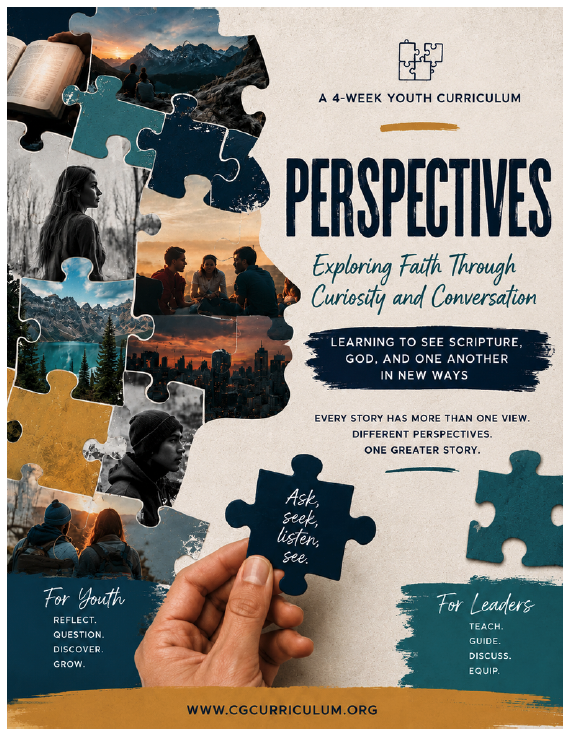
That's the heart behind Perspectives, a four-session youth curriculum from Common Ground Curriculum. Students don't just study Bible stories. They step inside them. They act them out. They imagine what different characters were thinking and feeling. They create artwork while listening to the story of Creation. They explore how history, language, theology, and culture shape the way we read Scripture. They wrestle with difficult passages alongside faithful thinkers who have asked these same questions for centuries. Most importantly, they discover that God isn't threatened by curiosity.
In fact, curiosity may be one of the ways faith grows. It's an invitation. An invitation to slow down. To ask thoughtful questions. To listen before assuming. To look again.
Because the goal of youth ministry isn't simply helping teenagers know more about the Bible.
It's helping them become people who return to Scripture for the rest of their lives—expecting God to keep surprising them, challenging them, and inviting them to see the world with greater wisdom, humility, and love.
After all, sometimes the thing that changes most isn't the story.
It's the way we learn to see.